Maryland state lawmakers passed emergency bills banning 287(g) agreements; community accounts contradict the Frederick sheriff’s claims that immigration enforcement stays in the jail.
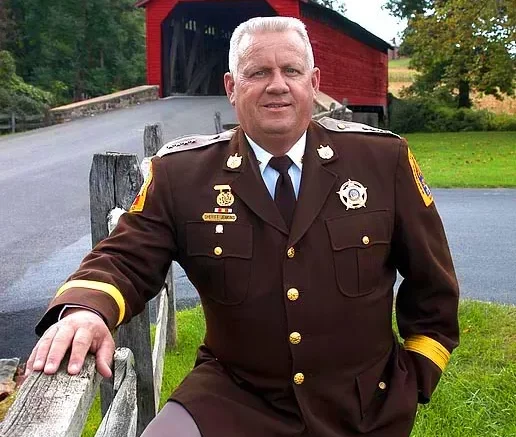
FREDERICK, Md. – One day after the Maryland General Assembly passed emergency legislation to ban local law enforcement partnerships with Immigration and Customs Enforcement, residents of a Frederick neighborhood are describing a different reality than the one Sheriff Chuck Jenkins has publicly portrayed.
The Maryland House of Delegates voted 99-40 and the Senate 32-12 on Tuesday to prohibit 287(g) agreements – the federal program that allows local officers to assist ICE with immigration enforcement.
If Governor Wes Moore signs the emergency legislation, Frederick County’s 18-year partnership with ICE – the longest-running such agreement in the nation — would terminate immediately.
Jenkins has vowed to challenge any ban in court and has consistently maintained that his county’s program is limited to the jail.
“No law enforcement officer on the streets of Frederick County asks any questions about immigration status,” Jenkins said at a January press conference when announcing his reelection bid.
“We simply don’t return criminals back onto the street. We hand those individuals off to ICE in a safe setting in their detention center.”
But in the Hillcrest neighborhood along Route 40, some residents describe something different.
What is the Maryland 287(g) ban?
Maryland’s emergency legislation (HB444/SB245) prohibits local law enforcement and sheriffs from entering into formal partnerships with ICE.
Passed in February 2026, the law requires counties like Frederick and Harford to terminate existing 287(g) agreements immediately upon Maryland Governor Wes Moore’s signature.
Community Reports of ICE Activity in Frederick, Maryland
In online forums and neighborhood discussions, Frederick residents have reported a pattern they say has intensified in recent weeks: county sheriff’s deputies conducting traffic stops, followed by unmarked vehicles they believe to be ICE agents who take individuals into custody.
“They stop cars and ask people in their car for their papers,” wrote one Hillcrest resident in a Feb. 1 post that drew more than 500 responses on a local community forum.
“They are followed closely by 2 unidentified ICE cars, which come out and apprehend people after they are stopped by the sheriff’s police cars.”
The account described abandoned vehicles along the Golden Mile, the commercial stretch of Route 40, and residents afraid to leave their homes for work, groceries, or other daily errands.
Another resident who lives adjacent to Hillcrest reported seeing two county police cruisers pull over a vehicle around 8 a.m. the following morning.
“I distinctly remember thinking, ‘Is this ICE?'” the resident wrote. When asked whether the cruisers were city or county police, the resident confirmed: “It was county police.”
A third account described approximately 50 officers gathering near a pet store on West Patrick Street in late January – a mix of uniformed officers, Homeland Security personnel, and individuals in plain clothes.
The witness reported seeing both Frederick City police and sheriff’s vehicles at the scene.
A Miner Detail could not independently verify these accounts.
Understanding the Maryland 287(g) Ban (HB444/SB245)
The disconnect between official statements and community accounts raises questions about the scope of Frederick County’s immigration enforcement activities.
Under the formal 287(g) agreement, Frederick operates what ICE calls the “Jail Enforcement Model.” ICE trains correctional officers at the Frederick County Adult Detention Center to question inmates about their immigration status.
Correctional officers may hold individuals determined to be in the country illegally for up to 48 additional hours to allow ICE to assume custody; this differs from other 287(g) models that explicitly authorize street-level enforcement.
ICE’s “Task Force Model”
The “Task Force Model,” which Frederick does not formally operate, allows deputies to question individuals about immigration status during routine encounters.
At a June 2024 public meeting with ICE, Sheriff Jenkins acknowledged he has not ruled out adopting the task force model, according to witnesses.
Jenkins also stated that he controls neither who ICE takes into custody nor the outcome if they do, noting that ‘even a U.S. citizen could theoretically be detained, and that would be out of my hands.
Immigrant advocacy groups have long argued that the distinction between jail-based and street-level enforcement is, in practice, meaningless.
“Frederick City does not operate its own jail,” noted a December report from the advocacy outlet OUT40.
“Anyone arrested by city police – whether for a traffic violation or a minor civil offense – is taken to the Frederick County Detention Center, where every individual is questioned about immigration status.”
The report found that Frederick City police initially arrested approximately 60 percent of individuals deported through the county’s 287(g) program – despite the city’s stated opposition to immigration enforcement partnerships.
Why Frederick Leads Maryland in ICE Custody Transfers
Frederick County leads Maryland in ICE custody transfers by a wide margin.
Since President Trump’s inauguration in January 2025, immigration arrests in Maryland have doubled.
Of the 170 custody transfers recorded across the state’s participating detention centers, more than half – 92 – originated at the Frederick County Adult Detention Center, according to data compiled by the Baltimore Banner and Capital News Service.
Jenkins has framed this as evidence that the program works. Critics say it demonstrates something else entirely.
“It’s an arrest that would likely be thrown out in criminal court, but because of the more lax standards in the immigration system, they often get the credit for enforcement, even though it was an unconstitutional stop,” said Nicholas Sweeney of the ACLU of Maryland, describing how pretextual traffic stops can feed the deportation pipeline.
The ACLU of Maryland filed a federal complaint in 2023 requesting that the Department of Homeland Security investigate Jenkins for civil rights violations and racial profiling.
The sheriff has denied all such allegations, stating his program has received no formal complaints in 16 years.
Maryland Democrats Take Legislative Action Aimed at ICE
The bills that passed Tuesday represent a dramatic shift from last year, when the Senate declined to act on a House-passed ban amid fears of federal retaliation.
Senate President Bill Ferguson, who held back the bill in 2024, is now a co-sponsor.
“The message we’re sending to Marylanders is that we are no longer going to formally cooperate with an agency that is engaged consistently and persistently in civil rights and constitutional rights abuses,” said Sen. William Smith Jr., D-Montgomery, chair of the Judicial Proceedings Committee.
The legislation is designated as an emergency measure, meaning it would take effect immediately upon the governor’s signature.
Eight Maryland counties currently have 287(g) agreements: Allegany, Carroll, Cecil, Frederick, Garrett, Harford, St. Mary’s, and Washington. All would be required to terminate those partnerships.
Gov. Moore has not indicated whether he will sign the bill. His office said Friday that he is “gravely concerned about ICE’s actions” and will “review legislation as it comes to his desk.”
What Happens Next with 287 (g) in Maryland?
Sheriff Jenkins has made clear he will not comply quietly.
“I don’t believe that a state legislature can take away the authority of a duly elected sheriff, which is a constitutional office, from making a decision to work with the federal government to keep their community safe,” Jenkins said in December 2025.
“I think there’s a huge court challenge there.”
For residents of Hillcrest and other immigrant communities in Frederick, the legal and political battles may feel abstract. What they describe is immediate: the fear of driving to work, of a traffic stop that becomes something more, of cars abandoned on the side of the road.
In the online forum, one resident offered to deliver groceries to neighbors afraid to leave their homes.
“If you’re afraid to leave your home to get essentials, I can also help,” another wrote.
Whether those fears reflect reality or rumor, whether the sheriff’s assurances match the street-level experience — those questions remain unanswered. The legislation now heading to the governor’s desk may make some of them moot.
But for families in Frederick, the uncertainty continues.
“They have to drive for WORK,” the original poster wrote. “It’s just so sad.”