
On Laken Riley, responsive congressional representation, and the progressive purity standard that doesn’t exist
The Laken Riley Vote
Let’s get the uncomfortable part out of the way first: The Laken Riley Act is a profoundly problematic federal law.
Mandatory detention based on accusations rather than convictions raises genuine due process concerns.
The ACLU’s warnings about racial profiling weren’t hysteria.
A federal court has already ruled that detaining someone solely on a prior arrest violates constitutional protections.
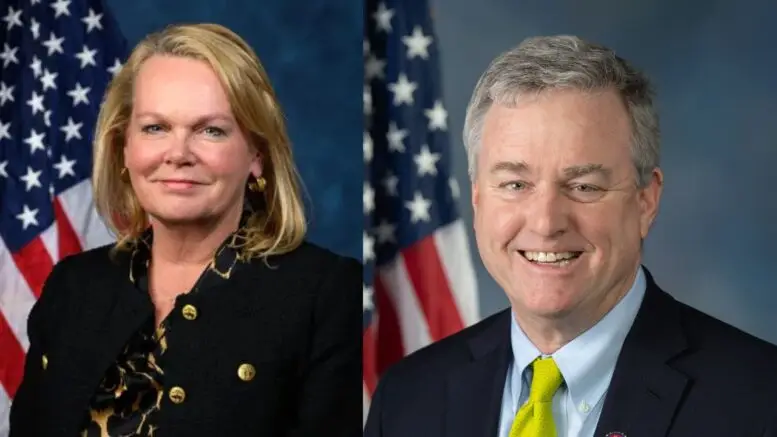
Rep. April McClain Delaney (D-Md.) voted for the Laken Riley Act. She was the only Democrat in the Maryland congressional delegation to do so.
And here’s what you should know: The 6th District congresswoman may have been doing precisely what congressional representatives in swing districts are supposed to do.
These things can all be true simultaneously.
The question is whether we’re honest enough to sit with that discomfort – and whether we’re willing to apply the same standard to April McClain Delaney that we use to every elected progressive who’s ever cast a vote they later regretted.
AOC’s Iron Dome Tears
In September 2021, Alexandria Ocasio-Cortez – the apparent avatar of American progressive purity – switched her vote on Iron Dome funding from “no” to “present” at the last minute and wept on the House floor.
“To those I have disappointed – I am deeply sorry,” Ocasio-Cortez wrote to her constituents.
AOC explained: “Yes, I wept. I wept at the complete lack of care for the human beings that are impacted by these decisions.”
The Democratic Socialists of America later pulled their national endorsement of her anyway. This year, DSA criticized AOC again for voting against a Marjorie Taylor Greene amendment to fund the Iron Dome.
Her response: “If you’re saying I voted for military funding, you are lying. Receipts attached.”
Bernie Sanders’s ’94 Crime Bill Vote
Bernie Sanders voted for the 1994 Crime Bill – legislation he now calls “terrible” – because he’d promised Vermont voters he’d support an assault weapons ban.
His explanation could have come from McClain Delaney’s own mouth:
“On the floor of the House when I voted for that, I knew it was a bad bill, but I made a promise to the people of the state of Vermont that I would vote to ban assault weapons. I ran for the United States Congress on that. And it would have been totally hypocritical of me to suddenly not vote for that legislation, as bad as it was.“
As recently as 2006, Sanders’ U.S. Senate campaign website cited that vote as the top example of his commitment to “tough on crime legislation.”
He campaigned on it – then spent the next decade calling it a disaster.
The Democrats’ Iraq War Vote
- Former Secretary of State Hillary Clinton called her Iraq War authorization vote her “greatest regret.”
- Former U.S. Senator Tom Harkin called the vote “the worst vote I ever cast in my life.”
- Current U.S. Senator Ed Markey says he regrets “relying upon the Bush administration for telling the truth.”
Obama & Biden’s Same-Sex Marriage Position Change
Former President Joseph R. Biden Jr. voted for the Defense of Marriage Act in 1996.
In the 2008 vice presidential debate, Biden stated flatly: “No. Barack Obama, nor I, support redefining from a civil side what constitutes marriage.”
By 2012, Mr. Biden’s position had “evolved.” And by 2022, President Biden signed the Respect for Marriage Act.
Moreover, it was Mr. Obama’s famously “evolving” position (until it wasn’t) that tracked almost perfectly with shifts in public opinion.
The Politicians We Forgive
Politicians who cast votes based on constituent pressure or imperfect information often watch those votes age poorly and update their positions litter the progressive firmament.
- We don’t call Bernie Sanders a fraud for regretting the 1994 Crime Bill.
- We don’t call former President Barack Obama a sellout for opposing same-sex marriage until 2012.
- We don’t condemn Alexandria Ocasio-Cortez in the halls of Congress for showing emotion on the House floor after a politically agonizing vote.
We call them human beings… who learned from evidence?
Isn’t that what we want from our members of Congress – to admit when they made difficult votes, to take accountability, to take ownership?
April McClain Delaney did the same thing – just faster, and on an issue less popular with her critics.
Edmund Burke, Delegates, and the 6th District
There’s a centuries-old debate about what representatives owe their constituents.
Edmund Burke told the voters of Bristol in 1774 that a representative owes them judgment, not blind obedience.
But the delegate model says the opposite: you’re there to channel your District’s preferences.
Safe-seat representatives become Burkean trustees.
AOC doesn’t lose sleep over whether her immigration votes play in conservative precincts. She doesn’t have any.
April McClain Delaney doesn’t have that luxury in Maryland’s most politically purple congressional swing district.
Maryland’s 6th District runs from upper Montgomery County suburbs through Frederick and out to the rural panhandle – Hagerstown, Cumberland, the Allegany County hollers where Trump flags still fly, and Deep Creek Lake.
Mrs. McClain Delaney won the 2024 congressional seat narrowly against a Republican who’d already run twice (and lost) for that seat. The 6th Congressional District includes voters who pulled the lever for Donald Trump and then split their ticket to vote for her.
She says her office received thousands of messages from constituents about immigration. She says more than half her casework involves immigration concerns.
And she says she listened.
What else do we want from April McClain Delaney?
Two Different Progressive Critiques
The progressive critique of McClain Delaney conflates two distinct things:
- The quality of the legislation.
- The quality of her representation.
If you argue that the Laken Riley Act is bad policy, you’re on solid ground.
But that’s not the argument being deployed against Mrs. McClain Delaney by her Democratic opponent, David Trone.
The argument is that Mrs. McClain Delaney somehow betrayed something – I don’t know what, though? Democratic values, immigrant communities, resistance to Donald Trump?
That framing assumes representatives from swing districts should vote like representatives from safe blue seats. It assumes the voters of Hagerstown and Cumberland don’t count, or that their preferences on immigration enforcement are illegitimate, or that a representative who listens to them is collaborating with the enemy.
That’s not a theory of representation; that’s a theory of aristocracy dressed up in progressive language.
McClain Delaney Regrets Her Laken Riley Act Vote
Now for the complication: In December 2025, Rep. McClain Delaney told the Baltimore Banner she regrets her vote.
She said she wasn’t “totally focused” on the due process provision. She said she didn’t envision the Trump administration sending armed, masked men into American cities.
McClain Delaney’s critics see her ownership of her Laken Riley Act vote as apparent proof of bad faith – she voted with swing voters in January, then “regretted” it when facing a primary challenge from her left in December.
But here’s another read: April McClain Delaney cast a vote in good faith based on constituent input.
She watched the Trump administration implement it in ways she hadn’t anticipated (and none of us had) and updated her position based on the evidence.
That’s not a flip-flop or anything else: April McClain Delaney is holding herself accountable for a vote she regrets.
What more can we ask of her?
Mrs. McClain Delaney has integrity and is willing to stand up and say, “Hey, I made a mistake; I apologize. I will do better.”
- That’s what Bernie Sanders did with the Crime Bill.
- That’s what Hillary Clinton did with her Iraq War vote.
- That’s what Presidents Obama and Biden did with marriage equality.
- That’s what AOC did when she switched from “no” to “present” on Iron Dome and then apologized to her constituents for disappointing them.
The standard that some Maryland progressives are applying to McClain Delaney is one that no elected progressive in American history has ever met – including the same politicians they tell us we need to worship.
And suddenly, David Trone, fresh off a humiliating loss in a U.S. Senate race, has become the torchbearer for progressivism; he’s writing gushing New York Times op-eds alongside Florida Governor Ron DeSantis, the poster child for legislating the most radically anti-science positions into law.
Uh huh. Right.
Here’s what I want to know: Why is Progressive Democrat David Trone palling around with MAGA Republican Governor Ron DeSantis?
I tried asking Mr. Trone a question once at the 2018 Potomac Day parade; he laughed right in my face while I was standing on the corner of River Road, holding my young daughter’s hand at the time.
That’s who David Trone is.
David Trone is Bored – That’s Why He’s Running for Congress (Again)
Now that David Trone is 70 years old and bored with life, he’s coming back to the 6th District to ensure his masculinity is secure.
After all, David Trone wants us to know that he’s a businessman.
I’m in business for myself, too; I imagine that if I just threw $62.9 million in the toilet, I might consider – oh, I don’t know – not doing that again – for business reasons?
And we’re supposed to believe that Mr. Trone is some business wizard – when Mr. Trone spends more personal cash than anybody else – ever – to lose a U.S. Senate primary race?
I have some questions about David Trone’s business acumen.
Mr. Trone has made the Laken Riley vote a centerpiece of his primary challenge against McClain Delaney, declaring that “we can’t have any Democrats in Congress voting with Trump.”
The same David Trone, who abandoned Maryland’s 6th Congressional District to run for the open Maryland U.S. Senate in 2024, lost to now-Senator Angela Alsobrooks and now seeks to reclaim the seat he voluntarily surrendered.
His campaign against McClain Delaney isn’t about principle; it’s about a wealthy former congressman who made a bet, lost, and wants a do-over.
David Trone is also apparently being responsive to voters — specifically, Democratic primary voters who want a harder line against Trump. The difference is that he’s positioning his responsiveness as principled opposition while attacking McClain Delaney’s responsiveness as collaboration.
That’s not analysis; it’s framing.
Democracy is Messy; America is Advanced Citizenship
Here’s the uncomfortable truth that neither political side wants to hear: April McClain Delaney cast a vote that a significant portion of her 6th District constituents wanted.
- She watched how the Trump administration implemented it.
- She said she regretted her vote on the 2025 bill.
- She’s now facing a primary challenge from someone who thinks that vote was a betrayal.
Democratic primary voters in MD-6 will decide who’s right.
That’s not a scandal.
That’s not a betrayal.
That’s democracy functioning exactly as designed – messy, frustrating, and unsatisfying to everyone who wants clean moral clarity.
The people who hate this are the people who want politics to be simple, a story of heroes and villains rather than a negotiation among citizens who disagree.
That’s not how American politics work; it’s never how American politics worked.
The progressive left within the Democratic Party seemingly wants a purity standard that even Bernie Sanders couldn’t meet, that AOC couldn’t meet, that Presidents Obama, Biden, and former Democratic presidential nominee Hillary Clinton couldn’t meet.
And for David Trone: It’s not about any of that; it’s about his bruised ego, his boredom, his inability to lose to a woman.
Maryland’s 6th Congressional District isn’t a Safe Blue Seat
Its voters aren’t monolithic.
Its representative tried to represent them – and then, like every progressive icon before her, updated her position when the evidence changed.
Whether April McClain Delaney did it well is for those voters to decide.
Not for commentators who’ve never knocked on a door in Hagerstown. Not for activists who think Cumberland is a font in Microsoft Word. And certainly not for David Trone.
Because let’s be clear about what’s actually happening here: David Trone endorsed April McClain Delaney to replace him.
He lost his U.S. Senate bid to Angela Alsobrooks by double digits.
And now – with no office in Congress, no actual platform (because nobody knows what he actually stands for), and no path forward except backward – David Trone decided that the woman he endorsed is suddenly unfit for the job he abandoned.
It gets even weirder: Mr. Trone demands the woman who won her congressional seat in 2024 (McClain Delaney), whom he endorsed, to step aside for him, a guy who blew $62.9 million on a losing proposition.
Maryland’s 6th District is not David Trone’s consolation congressional seat.
The seat belongs to me, my wife, Kimberly, my grandmother, Joyce, my mother, Colleen, my father, Bryan, my stepfather, Leon, our two kids, our friends, and our neighbors.
And we’re not interested in David Trone. We moved on.
What Maryland’s 2026 6th District Democratic Primary is Really About
April McClain Delaney listened to her 6th District constituents, cast a difficult vote, watched how it played out, and changed her mind.
That’s not betrayal.
That’s representation.
Progressives do this every single day. It’s just part of American politics.
The progressive purity standard David Trone is wielding against April McClain Delaney is one that Bernie Sanders couldn’t meet, that AOC couldn’t meet, that Obama and Biden couldn’t meet.
It’s a standard that exists only as a weapon – to be deployed against whoever is inconvenient and ignored whenever it’s not.
In Mad Men, Season One, Episode Four, the wise Ayn Rand-adherent Bert Cooper told Don Draper: You’re going to need a stronger stomach if you’re going to be back in the kitchen seeing how the sausage is made.”
David Trone spent six years in that kitchen. He knows exactly how it smells.
If progressives want representation in swing districts, they’re going to need a stronger stomach. The alternative is ceding those seats to MAGA Republicans (like Neil Parrott) and wondering why nothing ever passes.
But let’s stop pretending the 2026 CD-6 Democrat primary is about Laken Riley.
This Democratic primary is about whether a wealthy former congressperson can purchase redemption for a gamble that didn’t pay off.
No one stole the 6th District seat from Mr. Trone; he gave it away.
And no amount of money will change that – not even David Trone’s money.