A Democratic-aligned influencer firm is recruiting Instagram creators to post about addiction treatment and criminal justice reform in MD-06, the organization behind the campaign doesn’t appear to exist, and federal law doesn’t require anyone to tell you a sponsor paid for the posts.
A New York-based political influencer marketing firm is paying social media creators to post about addiction treatment, mental health, and criminal justice reform in Maryland’s 6th Congressional District ahead of the June 2026 Democratic primary.
The so-called advocacy organization funding the campaign has no legal existence, no public footprint, and no discernible origin outside of the firm running it.
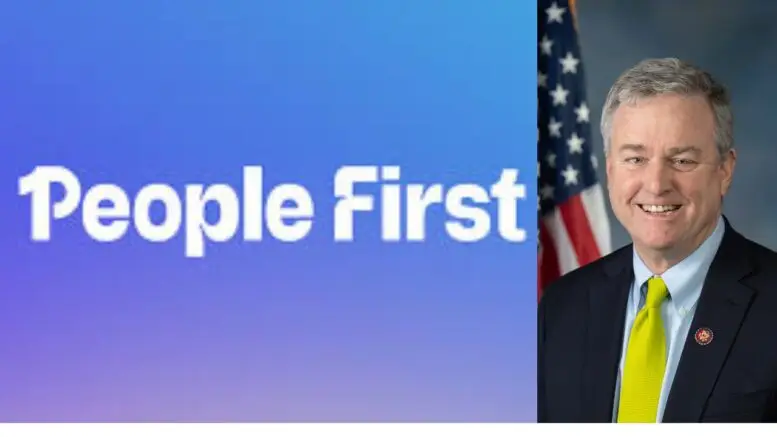
A Miner Detail obtained a copy of a paid partnership offer from People First. This Democratic-aligned micro-influencer firm has worked with the Biden-Harris campaign, the Democratic Governors Association, the DSCC, and Planned Parenthood.
A People First representative identified only as “Dawn” sent the offer to Maryland-based Instagram creators, recruiting them for a paid campaign tied to what the document describes as “an upcoming congressional race in Maryland’s 6th District.”
The deliverables include one in-feed Instagram post, two months of paid usage, and a rate of $900. The topics are mental health, criminal justice reform, addiction treatment, and community care. The campaign operates under the name “Maryland Voices for Community Care & Reform.”
But there’s one problem: Maryland Voices for Community Care & Reform does not appear to exist.
People First – A Ghost Organization
A Miner Detail searched every available public records database for an entity operating under the name Maryland Voices for Community Care & Reform.
The Maryland State Department of Assessments and Taxation has no business registration for it. The Federal Election Commission has no committee filing for it. The IRS Tax-Exempt Organization database lists no 501(c)(3) or 501(c)(4) under that name. The organization has no website, no social media accounts, no press coverage, no public statements, no organizational leadership, and no visible history of any kind.
As far as publicly available records show, “Maryland Voices for Community Care & Reform” is a name on a piece of paper.
Nothing more.
Someone seemingly created Maryland Voices for Community Care & Reform to recruit paid influencers for a congressional primary, and no public record reveals who that someone is.
David Trone’s Fingerprints Are All Over This
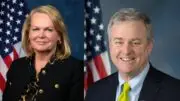
Former Congressman David J. Trone is challenging incumbent Rep. April McClain Delaney in Maryland’s 6th Congressional District in the June 2026 Democratic primary.
Mr. Trone previously built his congressional identity around addiction treatment, mental health, and criminal justice reform. His nephew Ian died from a fentanyl overdose in late 2016. That tragedy became the defining policy focus of his three terms in Congress. Trone co-chaired the Bipartisan Addiction and Mental Health Task Force.
He hosted opioid workshops in the 6th District, where he represented it from January 2019 to January 2025. He made addiction and criminal justice reform the centerpiece of virtually every public appearance during his time in office. Mental health. Criminal justice reform. Addiction treatment. Community care.
That is not a generic progressive issue set; it’s David Trone’s platform, restated almost verbatim.
People First: The Machine Behind the Curtain
People First is not a fly-by-night outfit.
CEO Ryan Davis runs a firm that pioneered micro-influencer campaigns for Democratic politics and cause advocacy. The company recruits everyday social media users, most of whom have fewer than 20,000 followers and have never done a brand deal before, and pays them to post about political issues in language that sounds personal and organic. People First has described its creators as “indistinguishable from real people.”
That is the point: the firm designs the content to appear grassroots in its enthusiasm.
But it’s not – it’s a paid political operation.
The company’s managed services platform controls the pipeline: identification, recruitment, briefing, content editing, distribution, and performance measurement. The client provides the money and the message. People First provides the people.
The firm’s co-founder, Curtis Hougland, told Digiday in 2023 that the company operates with full transparency.
“Everything that we do is 100 percent transparent as to who the brand is, who funded it,” Hougland said. “There’s no fraud, there are no bots, there’s no sock puppets. There’s nothing that’s dark about any of it.”
Hougland is no longer with People First. Mr. Davis confirmed as much in his response to A Miner Detail.
Whether the transparency Hougland promised left with him is a question Davis chose not to answer.
“No Comment” From People First
A Miner Detail contacted People First CEO Ryan Davis on April 2 with detailed questions about the Maryland 6th Congressional District influencer campaign.
The questions asked who is funding ‘Maryland Voices for Community Care & Reform,’ whether the campaign coordinates with any candidate in the 6th District Democratic primary, how many creators People First has recruited, and what disclosure requirements apply to the paid posts.
Davis responded in under one minute.
“No comment on this,” David wrote, “but flagging that Mr. Hougland has nothing to do with People First.”
Ryan Davis did not dispute a single fact, nor did he deny that People First is running a paid influencer campaign in MD-06. He did not identify the client behind “Maryland Voices for Community Care & Reform, and he didn’t address whether the campaign coordinates with any Democratic candidate running in the 6th District.
A Miner Detail also contacted David Trone’s congressional campaign on April 2 with questions asking whether the Trone campaign or any Trone-affiliated entity, including the David and June Trone Family Foundation, is funding or coordinating with “Maryland Voices for Community Care & Reform,” and whether the campaign has contracted with People First for influencer marketing services.
The Trone campaign did not respond to the questions submitted by A Miner Detail.
Influencer Campaigns Need Not Reveal Who They Are
Here’s what most people don’t know about paid political content on social media: there are almost no rules requiring anyone to disclose it as paid.
If a company pays an Instagram influencer to promote a pair of sneakers, federal law requires the influencer to disclose the payment. You have seen the hashtags #ad and #sponsored. The Federal Trade Commission enforces those rules – because sneakers are commercial products; consumers have a right to know when someone is selling to them.
But American political campaigns play by different rules.
If a campaign or outside group pays the same influencer to post about a political issue or a candidate, FTC rules do not apply. The FTC regulates commerce; elections aren’t commerce (at least not today). The FTC’s jurisdiction ends where politics begins.
That leaves the Federal Election Commission, the agency responsible for policing campaign finance and political advertising. The FEC requires “paid for by” disclaimers on television ads, radio spots, mailers, and online ads, including those where a campaign pays a platform like Facebook or Instagram to boost or promote a post. Everyone has seen those disclaimers at the bottom of a political commercial, or the copious glossy paper flyers politicians send that clog our mailboxes.
But in a rule finalized in 2024, the FEC decided that paying an influencer to post on their own social media account is not the same thing as paying for an ad. The Commission reasoned that an influencer posting on Instagram is more like a person standing on a soapbox in a public park than a campaign running a television commercial.
Two FEC commissioners, Democrats Ellen Weintraub and Shana Broussard, publicly disagreed. They called the decision a missed opportunity to address what they described as “behind-the-scenes payments to social media influencers.” Paying someone to promote a political message on social media, they argued, is a modern form of paid advertising and should be treated that way.
The Campaign Legal Center and the Brennan Center for Justice have both urged the FEC to close this gap. In a 2024 poll conducted by Tech Policy Press and YouGov, 80 percent of American voters across both parties said they support requiring influencers to disclose when a political group pays them to post.
The FEC has not acted.
A political operation can pay an influencer $900 to post about addiction treatment and criminal justice reform in a congressional district two months before a primary election. The influencer has no federal obligation to tell followers that a sponsor funded the post, who paid for it, or what political campaign it serves.
That’s the regulatory environment in which “Maryland Voices for Community Care & Reform” operates.
6th District Voters Deserve To Know Who’s Influencing Them
Let me be clear about what this story is and what it is not.
This story does not assert that David Trone is behind “Maryland Voices for Community Care & Reform.” A Miner Detail does not have documentary proof of that connection. This publication does not publish what it cannot prove.
People First is a professional political influencer firm with deep Democratic ties that’s running a paid campaign in Maryland’s 6th Congressional District under the banner of an organization with no legal existence, no public presence, and no transparency about its funding. The campaign’s issue set is a near-exact replica of one candidate’s platform. The firm’s CEO declined to identify the client. The candidate whose platform matches the campaign’s issues did not respond to questions about it.
Voters in Maryland’s 6th District deserve to know who or what pays to shape what shows up in their Instagram feeds.
We deserve to know whether what appears to be organic community advocacy is actually a manufactured campaign funded by a political operation. And we deserve to know why the organization behind this effort has no existence outside of the recruitment emails sent by the firm executing it.
When a campaign runs a television ad, you see who paid for it. When a Super PAC sends a mailer, a disclaimer sits on the back. But when a professional influence firm pays your neighbor to post about a candidate’s issues on Instagram, the law says you do not need to know a thing about it.
80% of voters across both parties say it is wrong. If you see “political influencers” suddenly clogging up your Insta feed, send me the link at Ryan@AMinerDetail.com.
The FEC has done nothing about it. And in the meantime, operations like “Maryland Voices for Community Care & Reform” fill the gap.
FEC Q1 filings for the 2026 cycle are due April 15.
A congressional campaign must itemize every disbursement over $200 made between January 1 and March 31, 2026, by payee and purpose. A Miner Detail will review the filings from every committee in the MD-06 race the day they drop.
If People First shows up in anyone’s disbursements, we will report it. If it does not, that is a story too – because it means the money is flowing through a channel that doesn’t report to the FEC.
Someone is paying to put David Trone’s issues in front of Maryland voters and hiding behind a name that doesn’t exist.
So, who’s behind it?
A Miner Detail contacted People First CEO Ryan Davis, Trone campaign Chief of Staff Nathaniel McCarthy, and a spokesperson for Rep. April McClain Delaney for this story. Davis declined to comment. The Trone campaign did not respond to detailed questions submitted on April 2 with a response deadline of April 4 at 5:00 p.m. When reached, a spokesperson for McClain Delaney acknowledged the issue but did not respond to questions submitted by A Miner Detail.
Hi, I’m Ryan. I’m the founder, editor, and publisher of A Miner Detail. Please connect with me at Ryan@AMinerDetail.com.